


How to brief a Composer
There comes a point in every production where the conversation turns to music.
It’s exciting. It’s creative. And for a surprising number of producers and directors, it’s also slightly terrifying.
Scripts can be discussed line by line. Shots can be framed, adjusted and reviewed. Artwork can be pointed at and debated. Music is different. It’s often difficult to describe, difficult to visualise and, for many people, difficult to talk about.
Over the years I’ve worked with plenty of directors who were completely comfortable discussing story, character, editing and performance, but became slightly nervous the moment the conversation moved to music.
The good news is that you don’t need to be a musician to brief a composer well.
In fact, some of the best briefs I’ve received have come from people with no musical background whatsoever.
The first thing to understand is that it’s perfectly acceptable not to know exactly what you want.
“The more a composer understands about the project, the better their chances of writing something that genuinely belongs to it.”
You’re not ordering a carpet or choosing a company car. Music is part of a creative process. It evolves alongside the project. A good composer should help you discover the answer, not simply wait for you to provide one.
What does help enormously is context.
The more a composer understands about the project, the better their chances of writing something that genuinely belongs to it. Not just what happens on screen, but what the project is trying to say underneath the surface. What is the story really about? What do you want the audience to feel when they leave?
Those conversations are often more valuable than discussions about instruments, genres or musical references.
Examples can be incredibly useful too, provided they’re specific.
Saying you want something “uplifting”, “cinematic” or “contemporary” sounds helpful, but those words mean different things to different people. Two directors can use exactly the same phrase and imagine completely different pieces of music.
If you have a reference track, explain what you’re responding to. Is it the energy? The pacing? The emotional restraint? The instrumentation? Understanding why you like something is usually more useful than the example itself.
Visual material helps as well.
Even if the film isn’t finished, storyboards, concept art, character designs and early edits all tell a composer something about the world they’re stepping into. Composers tend to be surprisingly visual creatures.
Practical information matters too.
Budgets, schedules, deadlines and delivery expectations are not the least exciting part of the process. They’re often what determines what’s possible. If you’re considering live musicians or orchestral recording, those conversations need to happen early. The logistics often start long before the first note is written.
One thing I would generally avoid is giving musical instructions.
Even if you’re a musician yourself, it’s usually more useful to explain what you want the music to achieve rather than how you think it should be achieved. Tell me the feeling. Tell me the problem. Tell me what isn’t working.
The solution is the composer’s job.
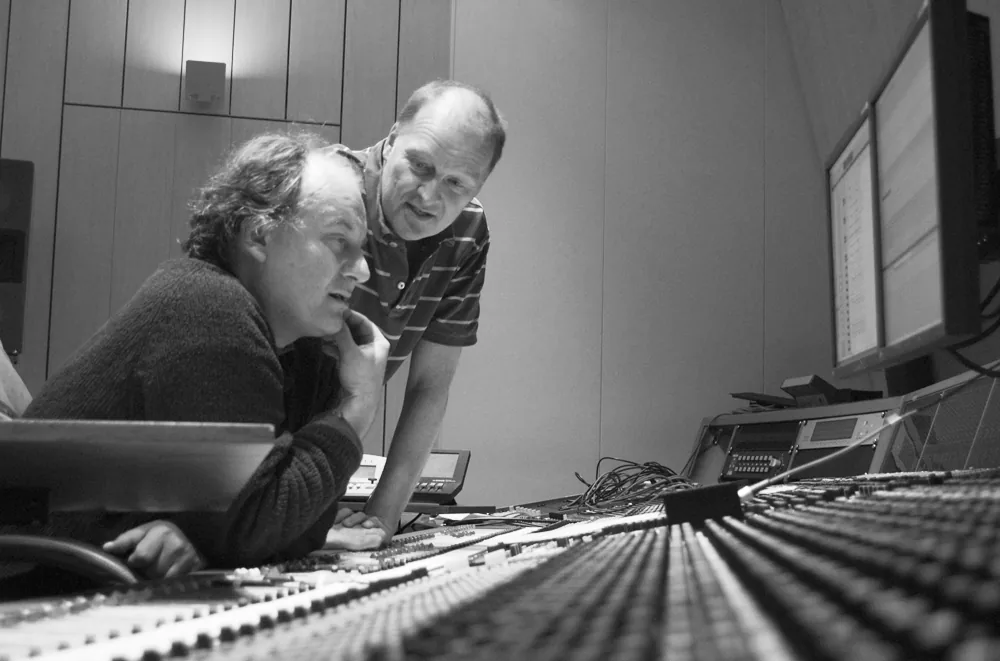
Sometimes the best brief isn’t a written document at all. It’s a conversation. A shared viewing of a rough cut. A discussion about character, story and intent. The more open the exchange, the more likely the music is to become something neither of you would have arrived at on your own.
And finally, don’t be afraid to tell a composer what you don’t like.
Every project has boundaries. If there are particular sounds, styles or approaches that feel completely wrong for the production, it’s better to establish that early. It saves everybody time and avoids unnecessary detours.
At its best, the relationship between a director and composer is a collaboration rather than a transaction.
You’re both trying to solve the same creative problem.
The better you understand each other, the better the music tends to be.