


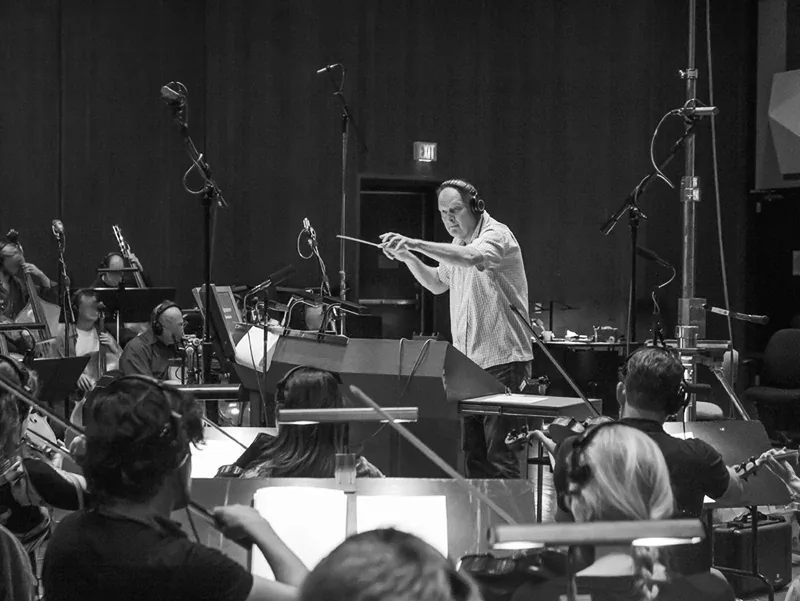
A Producer’s guide to working with live Orchestra
The first time you hear a live orchestra play the music for your project is a moment you don’t forget.
You’ve lived with the script, the edits, the rough cuts and the temporary music for months, sometimes years. Then suddenly a room full of musicians starts performing something that exists solely because your project exists. It’s a remarkable thing.
It’s also the point at which a lot of producers discover just how much work happens before anyone plays a note.
From the outside, recording with an orchestra can look deceptively simple. Book a studio, hire some musicians, turn up and press record.
In reality, it’s a carefully coordinated process involving composers, orchestrators, contractors, recording engineers, score preparation teams, studio managers and musicians. When it works, it’s magical. When it doesn’t, it can become expensive very quickly.
The biggest piece of advice I can offer is surprisingly straightforward: start planning early.
The best studios and orchestras are often booked months in advance. If a project might involve live musicians, those conversations should begin long before the final score is written. Sometimes before the composer has even been hired.
Budget matters too, but not always in the way people imagine.
“The audience may never know why it feels different. They’ll just feel it.”
A larger budget doesn’t simply buy more musicians. It buys time, flexibility, experience and options. Sometimes the most effective solution isn’t a full orchestra at all. A handful of exceptional musicians combined with electronics or samples can transform a score in ways that far exceed the cost.
What matters is understanding what the project actually needs.
Not every film wants a wall of sound. Not every television drama needs eighty musicians. Some projects come alive through a single soloist. Others need the scale and energy that only a large orchestra can provide.
One thing that remains true regardless of budget is the value of real performers.
Anyone can buy the same sample libraries. Anyone can access the same virtual instruments. Real musicians bring something far more difficult to replicate: personality.
The subtle variations in performance, the phrasing, the imperfections, the decisions made in the moment. Those are often the things that audiences respond to most strongly, even if they don’t consciously realise it.
A live orchestra rarely sounds exactly like the mock-up you’ve been listening to for months. In fact, it shouldn’t. The score gains depth, movement and humanity. It starts breathing.
That’s why producers occasionally tell me they preferred the demo right up until the moment they hear the finished mix against picture.
Then suddenly it makes sense.
The truth is that recording live music isn’t really about authenticity or tradition. It’s about emotional connection. Whether you’re recording a full orchestra, a string quartet or a single solo player, you’re introducing a level of expression that technology still struggles to imitate.
And that’s often what elevates a project from sounding good to feeling memorable.
If you’ve already invested years of effort into creating something worth watching, it’s worth considering what live musicians might bring to the experience.
The audience may never know why it feels different.
They’ll just feel it.